

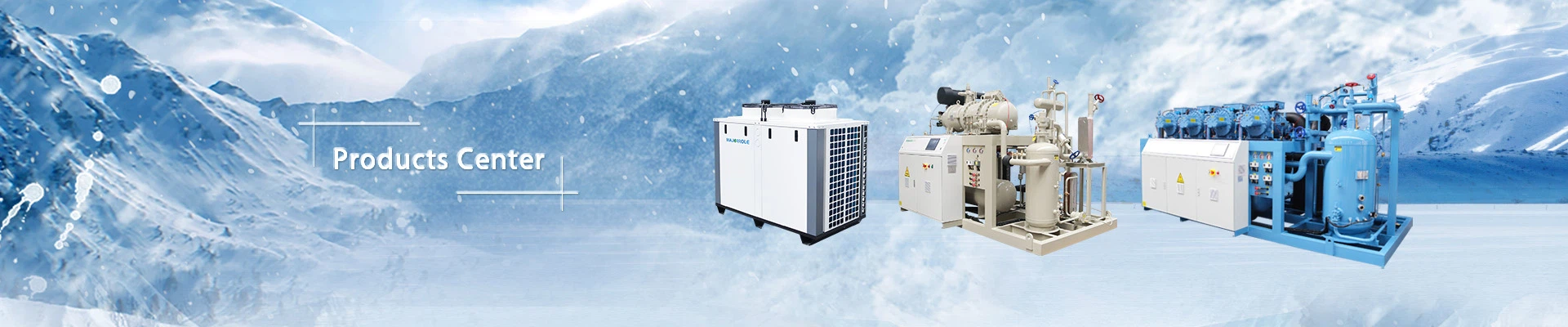
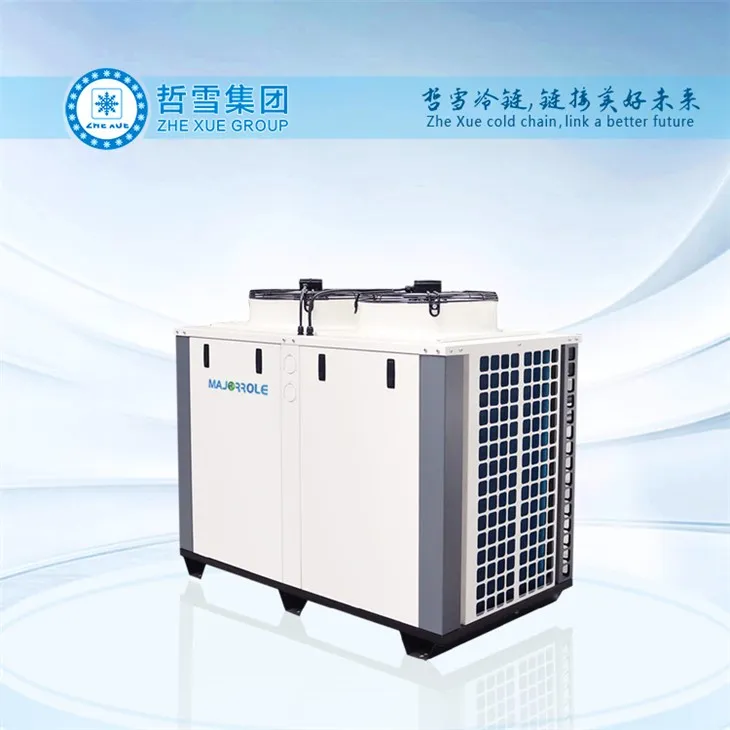
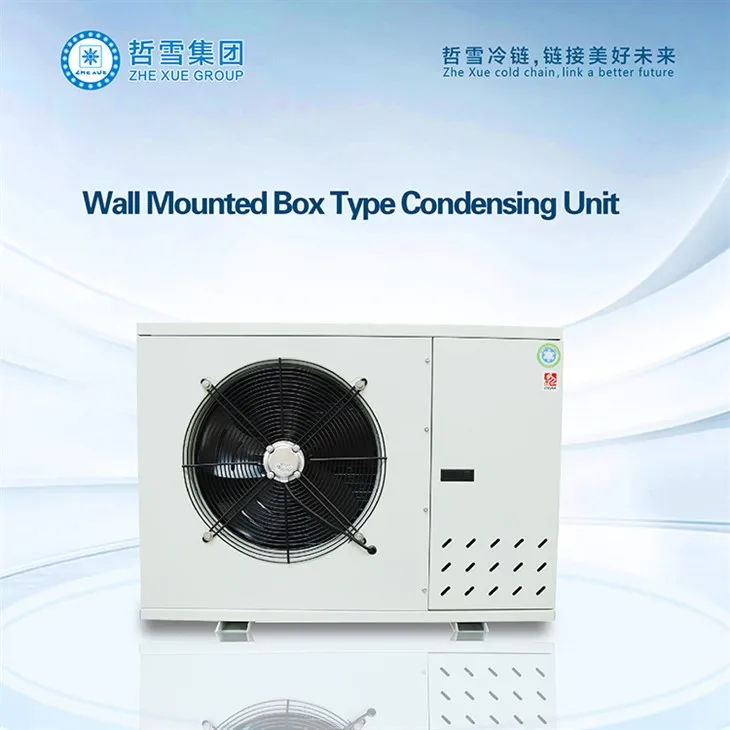
Air Cooled Condensing Unit
Why Choose Us
Variety of products
Our company offers a wide range of products, can offer a wide variety of products or services to their customers. This provides more options to choose from and can improve customer satisfaction.
Reliable quality
Our company have quality assurance mechanisms in place to ensure that their products meet certain standards. This can provide customers with confidence that they are getting a reliable product.
Competitive pricing
Our company provides customers with competitive pricing on its products without compromising their quality.
Customer service
Our team is highly responsive and always available to assist our customers with any questions or concerns.
What Is Air Cooled Condensing Unit?
Air Cooled Condensing Units are a type of refrigeration system component. They are commonly used in air conditioning and refrigeration applications. An Air Cooled Condensing Unit typically consists of a compressor, a condenser coil, and a fan. The compressor compresses the refrigerant, raising its temperature and pressure. The hot refrigerant then flows through the condenser coil, where it releases heat. The fan blows air over the coil to facilitate heat dissipation. In the refrigeration cycle, the refrigerant absorbs heat from the area being cooled and then needs to be released to complete the cycle. The condensing unit accomplishes this by transferring the heat to the surrounding air.


Air Cooled Condensing Units offer several advantages, including simplicity of installation and maintenance, lower initial cost, and independence from a water source. They are suitable for various applications, such as residential and light commercial air conditioning systems. When choosing a condensing unit, it's essential to consider the specific needs and constraints of the project to determine the best option.
Simplicity and ease of installation: Air Cooled Condensing Units do not require a complex water cooling system, making them relatively easy to install and set up. This simplicity can reduce installation time and costs.
Lower maintenance requirements: With no water involved, there are fewer components that may require maintenance or potential issues related to water systems, such as leaks or scaling.
Independence from a water source: As mentioned earlier, Air Cooled Condensing Units do not rely on a water supply, making them suitable for locations where access to a water source may be limited or unavailable.
Cost-effective: Generally, Air Cooled Condensing Units tend to have a lower initial cost compared to water-cooled units, as they have fewer components and no need for a water circulation system.
Flexibility in location: Air Cooled Condensing Units can be installed in various locations, as long as there is sufficient air circulation to dissipate the heat. This gives more flexibility in system design and placement.
Reliability: Air Cooled Condensing Units are known for their reliability and durability. They are less prone to issues like water leaks or clogged pipes that can occur in water-cooled systems.
Easy to diagnose and repair: Since the components are relatively straightforward, troubleshooting and repairs usually involve fewer complexities, making it easier to identify and address any problems.
Energy efficiency: Modern Air Cooled Condensing Units are designed to be energy-efficient, helping to reduce operating costs and environmental impact.
Quieter operation: Without the need for a pump and water flow, Air Cooled Condensing Units often operate more quietly, which can be beneficial in certain environments.
How Do You Maintain an Air Cooled Condensing Unit?
From our interactions with maintenance and facility directors, budgetary constraints are sometimes too much. Some companies have also postponed or even ignored the dirt on their condenser coils because of resource constraints and knowledge inadequacy. The unfriendliness of this maintenance process is also a common reason for this disregard. The list can be endless, but one fact remains- postponing or ignoring maintenance of condenser coils in air cooled systems is a risky affair that not only increases the odds of equipment failure, but also puts a dent in the company’s revenues.
Cleaning condenser coils in air cooled condensing units offers many economic, safety and health benefits. It will also save you money and keep the chiller running for longer. We recommend that you clean the coils at least annually, but you could do it more frequently depending on conditions in your area.
Air cooled condensing units are used in power stations to condense waste steam after the steam turbine. The heat is dissipated to the ambient air by convection. This is a closed cooling circuit. The steam circulates through a heat exchanger which is cooled by the air flowing round it. The accumulated condensate is collected and re-used in the power plant process. Air cooled condensing units are specially designed for condensing turbines in power plants. The fan is directly mounted on the two-stage helical gear unit which absorbs the reactive forces of the rotor via a reinforced output bearing arrangement. The gear units are optimized for both fixed and variable speeds and are characterized by high operational reliability.

How do air cooled condensing units work?

Air cooled condensing units are a type of refrigeration system component. They are commonly used in air conditioning and refrigeration applications. The main function of an air cooled condensing unit is to remove heat from the refrigerant. In the refrigeration cycle, the refrigerant absorbs heat from the area being cooled and then needs to be released to complete the cycle. The condensing unit accomplishes this by transferring the heat to the surrounding air.
An air cooled condensing unit typically consists of a compressor, a condenser coil, and a fan. The compressor compresses the refrigerant, raising its temperature and pressure. The hot refrigerant then flows through the condenser coil, where it releases heat. The fan blows air over the coil to facilitate heat dissipation.
During operation, the fan pulls air through the condenser coil, helping to lower the temperature of the refrigerant. The cooled refrigerant is then ready to continue the refrigeration cycle. Air cooled condensing units are relatively simple and do not require a water supply like water-cooled units.
It's important to note that the specific design and features of an air cooled condensing unit can vary depending on the application and manufacturer. When installing or maintaining such units, it is advisable to follow the manufacturer's guidelines and seek professional assistance if needed.
A condenser is a component in the basic refrigeration cycle that ejects or removes heat from the system. The condenser is the hot side of an air conditioner or heat pump. Condensers are heat exchangers, and can transfer heat to air or to an intermediate fluid (such as water or an aqueous solution of ethylene glycol) to carry heat to a distant sink, such as ground (earth sink), a body of water, or air (as with cooling towers). In order for the condenser to work properly, it must be able to dissipate this heat quickly and efficiently.
There are two main types of condensers: air-cooled and water-cooled. Air cooled condensing units use fans to circulate air around the coils in order to dissipate heat. Water-cooled condensers use water to remove heat from the system. These types of condensers are more efficient than air cooled condensing units, but they require a water source and a way to dispose of the heated water.
The most common type of air cooled condensing unit is the split system, which has an outdoor unit that contains the compressor, condenser, and fan, and an indoor unit that contains the evaporator. The split system is the most popular choice for residential applications.
Water-cooled condensers are commonly used in commercial applications because they are more efficient than air cooled condensing units. However, water-cooled condensers require a water source and a way to dispose of the heated water.
When choosing an Air Cooled Condensing Unit, here are some factors to consider:
Capacity and sizing: Determine the appropriate size and capacity of the air cooled condensing unit based on the cooling load of the application. An undersized unit may not provide sufficient cooling, while an oversized unit can lead to inefficient operation and higher energy costs.
Efficiency and energy rating: Look for units with high energy efficiency ratings. This will help reduce operating costs and environmental impact.
Brand and reputation: Research different brands and their reputation for quality, reliability, and customer service. Reading reviews and seeking recommendations can be helpful.
Climate and environment: Consider the local climate and operating environment. Units designed for specific temperature ranges or dusty or corrosive environments may be necessary.
Noise level: If noise is a concern, look for units with low noise levels or noise reduction features.
Maintenance and serviceability
Check the ease of access for maintenance, availability of replacement parts, and the manufacturer's warranty and support.
Compatibility with the system
Ensure the air cooled condensing unit is compatible with the rest of the refrigeration or air conditioning system, including the compressor and other components.
Cost and budget
Consider the initial cost of the unit as well as long-term operating costs. While a cheaper unit may seem appealing, it's important to balance cost with quality and performance.
Where Should an Air Cooled Condensing Unit Be Installed?
Central air conditioners and mini-split ductless systems use an indoor-outdoor approach to home cooling. In a central AC system, this includes the indoor evaporator coil and the outdoor condenser. The condenser should always go outside of your home and not in an attic, basement, garage, or crawl space.
Why does the condenser need to go outside of your home? The top reasons include:
Air supply
The condenser needs an adequate air supply to cool the refrigerant and do its job. Without enough outdoor air, it won't work efficiently.
Airflow
Not only does the condenser require enough air to function properly, but it also needs plenty of airflow. You won't find a suitable natural flow indoors.
Heat
The outdoor placement provides plenty of space for the condenser to release the heat. An indoor location can cause excessive heating of your home's interior, which reduces the overall effectiveness of the AC system.
What Are Some Ways That an Air Cooled Condensing Unit Can Be Made More Efficient?

Although it's tempting to draw a boundary around the condenser when evaluating regions for improvement, it's critical to remember that the condenser and the circulating water system are effectively one functional unit. Because the temperature and quality of the cooling water has a significant effect upon condenser performance, it’s therefore important to consider improvements to the circulating water system contemporaneously with improvements to the condenser. Reducing cooling water temperatures is a sure-fire way to improve condenser performance: A decrease in cooling water temperature of 10 degrees F can improve the overall heat rate of a power plant by 1%.
Some have also discovered that problems with their condenser can lead to severe and unexpected impacts throughout other systems in their power plant.
One example is a case where a power plant suffered from severe copper deposits on the inside of its boiler tubes. Investigation of the root cause revealed that the dissolved oxygen level in the feedwater was excessively high, yet an inspection of the feedwater system revealed no obvious leaks. By careful monitoring and diagnostic work, engineers discovered that the condenser suffered from strange decreases in its vacuum levels at high generation loads, but not at low loads (Figure 4). Furthermore, dissolved oxygen levels rose sharply at low loads. This effect was calculated as costing the utility approximately $38,000 per month in lost efficiency and generation. An investigation of the problem revealed a leak in the condenser hotwell, which only occurred under high-vacuum conditions. Repairing this leak not only reduced the dissolved oxygen of the water but also resulted in a heat rate improvement of 800 Btu/kWh.
Our Factory
On October 27, 2017, Zhexue Group setled in Nantong.
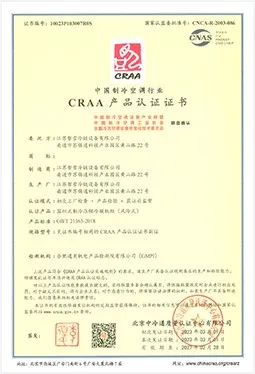
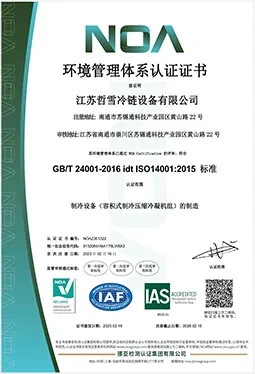
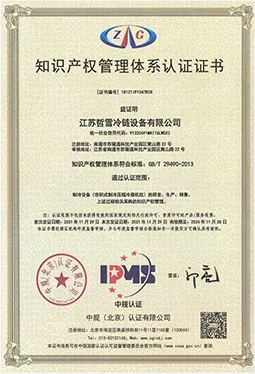
As a national high-tech enterprise, Zhexue has a construction enterprise qualification certificate, a special equipment production license of the People's Republic of China, a Chinese equipment maintenance and installation enterprise capability level certificate, a CRAA product certification certificate, and a safety production license. China Refrigeration Society unit membership certificate and other qualifications, and passed the ISO9001 quality management system, IS045001 occupational health and safety management system and S014001 environmental management system certifcation.
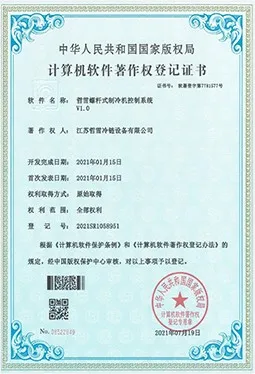
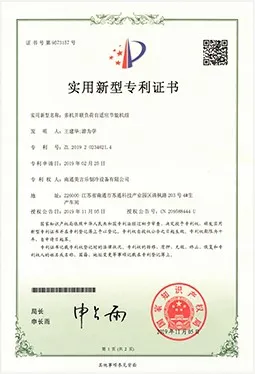
With refined product manufacturing and meticulous quality pursuit, Zhexue pilots and wins in the field of refrigeration, integrating advantages and innovating resources, focus on improving the enterprise's ability to integrate innovation and the ability to introduce, digest, absorb, and re- innovate, and embark on a road of innovation and entrepreneurship with independent itellectual property rights.


Our Honor
Official certification, professional after sales service.
Ultimate FAQ Guide to Air Cooled Condensing Unit
Q: What is the function of the air cooled condensing unit?
Q: Which is better air-cooled or water-cooled condensing unit?
Q: What is the most common build of air cooled condensing unit?
Q: Which is more efficient water-cooled or air cooled condensing unit?
Q: What are the applications of air cooled condensing unit?
Q: How to maintain air cooled condensing unit?
Clean dirt, dust, leaves, and other debris from around and inside the unit.
Clean coils with condenser coil cleaner to remove grime, dirt, and dust.
Straighten coils to ensure proper airflow.
Ensure unit is on firm, level ground or placed on a pad and away from tall grass or dense foliage.
Q: What are some ways that an air cooled condensing unit can be made more efficient?
Q: What is the use of air-cooled condensing unit?
Q: Which is better air-cooled or water-cooled condensing unit?
Q: 10. How do you maintain an air cooled condensing unit?
Q: What is the most important consideration when installing a unit with an air cooled condensing unit?
Q: Where should an air-cooled condensing unit be installed?
Q: What is the life expectancy of an air cooled condensing unit?
Q: What is the most common build of air cooled condensing unit?
Q: What are the maintenance requirements of a condenser?
Q: What is one advantage of having an air cooled condensing unit?
Q: How far should air cooled condensing unit be from house?
The best way to maintain this breathing room for your condenser is to allow 2–3 feet of clearance on all sides. Installing your ac unit too close to the house will prevent proper airflow and cause functionality issues. The cooling system will have to work harder, resulting in higher energy bills. Improper clearance can also be dangerous to both the system and your home.
Q: What is the most important consideration when installing a unit with an air cooled condensing unit?
Q: Which is better air cooled or water cooled condensing unit?
Q: Where should an air cooled condensing unit be installed?
We're professional air cooled condensing unit manufacturers and suppliers in China, specialized in providing high quality products and service. We warmly welcome you to buy customized air cooled condensing unit at competitive price from our factory.
commercial refrigerator pressure condensing unit, cooling machinery heat exchanger unit, cooling machinery energy consumption unit