

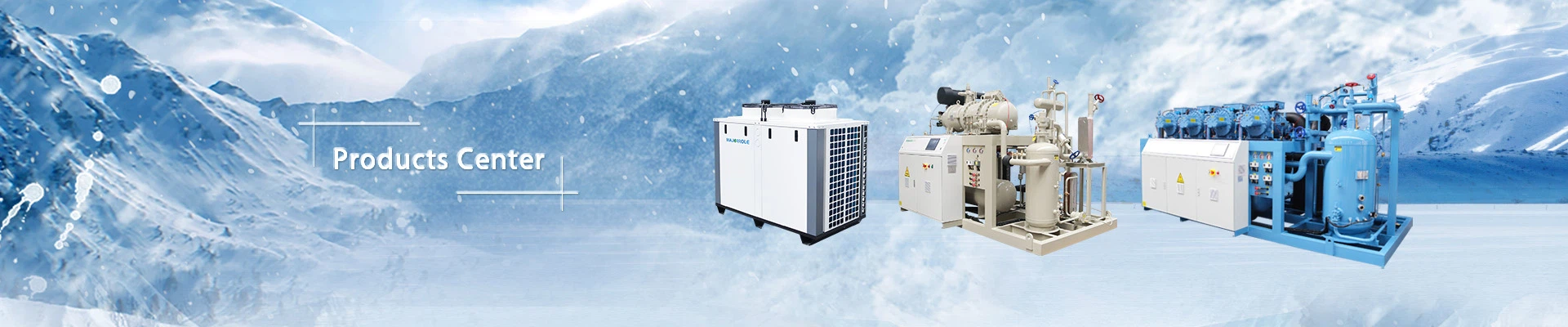
Industrial Condensing Unit
Why Choose Us
Variety of products
Our company offers a wide range of products, can offer a wide variety of products or services to their customers. This provides more options to choose from and can improve customer satisfaction.
Reliable quality
Our company have quality assurance mechanisms in place to ensure that their products meet certain standards. This can provide customers with confidence that they are getting a reliable product.
Competitive pricing
Our company provides customers with competitive pricing on its products without compromising their quality.
Customer service
Our team is highly responsive and always available to assist our customers with any questions or concerns.
What Is Industrial Condensing Unit?
An industrial condensing unit is a specialized type of equipment used in industrial applications to condense a vapor or gas into a liquid. It plays a crucial role in various industrial processes where the separation or concentration of substances is required. They are commonly found in industries such as chemical processing, petrochemicals, refrigeration, air conditioning, and food and beverage processing.


When choosing an industrial condensing unit, it's important to consider the specific needs and requirements of the facility to ensure the best performance and efficiency. The advantages of industrial condensing units include the following.
High cooling capacity: Industrial condensing units are designed to handle large cooling loads, making them suitable for commercial and industrial spaces with significant heat generation.
Efficiency and energy savings: They are often more energy-efficient compared to other cooling solutions, helping to reduce operating costs and environmental impact.
Reliability and durability: Built with rugged components and designed to withstand harsh operating conditions, industrial condensing units offer long-term reliability and durability.
Precise temperature control: These units provide accurate temperature control, crucial in applications where specific temperature ranges are required, such as in laboratories or sensitive processes.
Customization options: They can be customized to meet the unique requirements of different industrial settings, allowing for tailored solutions.
Easy maintenance: With proper maintenance, industrial condensing units can operate reliably with minimal downtime, ensuring continuous cooling performance.
Versatile applications: They find use in a wide range of industries, including manufacturing, food and beverage, healthcare, and data centers.
Remote monitoring and control: Some industrial condensing units offer the ability to monitor and control parameters remotely, enabling efficient management and troubleshooting.
Where and How to Install the Industrial Condensing Unit?
The industrial condensing unit is separated from the refrigerated cabinet in refrigeration systems. For air conditioning, it can be located on the outside of the room where external ventilation assists in cooling down the refrigerant fluid passing through the inside of the system. Besides this, in the external environment the unit’s noise is isolated, being minimally perceived by the occupants of the internal environment.
When installing the contractor must take some precautions:
● The industrial condensing unit must be installed in a ventilated environment allowing fresh air flow to the condenser. Therefore, avoid enclosed places, close to walls, heat sources or other systems.
● If installed in a closed environment, ensure that the industrial condensing unit will receive fresh air in the condenser inlet and will have an unobstructed hot air outlet.
● Also avoid places with high incidence of sunlight, dust, rain and strong air currents, which can influence the equipment’s proper functioning.
● Choose a firm, durable surface to install the unit, avoiding irregular, uneven places or soft surfaces.
● The industrial condensing unit should not be far away from the cold part of the cycle (evaporator), so that there is no pressure loss in the tubing and hence loss of efficiency. Moreover, tubing that is far from the system, may accumulate and retain oil, which can damage the compressor. Therefore, the simplest and shortest tubing possible is recommended.
● Avoid placing the condenser unit well above or well below the level of the evaporator.
Applications of Industrial Condensing Unit


Industrial condensing units are a vital component in temperature-control devices like air conditioners, chillers, heat pumps and refrigerators. Here are some common industrial condensing unit applications:
Refrigeration and freezer systems: Industrial condensing units are widely used in commercial and industrial refrigeration systems, including cold storage warehouses, supermarkets, food processing plants, and medical facilities.
Air conditioning systems: They are also used in large commercial buildings, such as offices, shopping malls, hospitals, and hotels, to provide cooling.
Process cooling: Industrial condensing units are employed in various industrial processes that require cooling, such as plastic injection molding, chemical reactions, and metal fabrication.
Data centers: They are used in data centers to cool servers and other electronic equipment to prevent overheating.
Pharmaceutical and medical industries: In pharmaceutical manufacturing and medical facilities, industrial condensing units are used for temperature control in laboratories, clean rooms, and storage areas.
Agriculture and horticulture: They are used in agricultural and horticultural applications, such as greenhouses and food storage facilities, to maintain specific temperature and humidity levels.
Mining and oil and gas industries: Industrial condensing units are used in mining operations and oil and gas facilities to cool equipment and control the temperature in working environments.
Textile and printing industries: They are used in textile mills and printing plants to control the temperature and humidity levels, ensuring the quality of the final products.
A piece of equipment doesn't make a system
Every cooling project needs to go through 4 processes in the heating and cooling cycle: Compression > condensation > expansion > evaporation.
All cooling projects, ranging from an ac to an avocado packing facility, need all 4 systems to carry out their functions. However, their dimensions, tech specs, and assembly must be outlined by a dedicated engineer.
A fundamental component towards achieving the cooling cycle is the coolant. This is a chemical component whose properties allow for heat absorption from one body to another, thus lowering a body's temperature.
Each industrial condensing unit plays with the coolant, turning it from a liquid state to a gas one, which results in heat absorption of food, chemical substances, etc., during this chemical process, releasing it.
Essentials for a cooling system
Now, once the fundamentals of a cooling system are clear, it's time to describe the role they play in the primary industrial and commercial cooling equipment.
Compressors & compressor racks. What are their roles in a cooling system?
Let's remember that, as part of the cooling cycle, the compressor is responsible for the cooling agent flow throughout the system, which raises the evaporation pressure to the point of condensation pressure.
Next, you can find the types of technology available in the market for compressors, all of which can fit into standard cooling agents.
Condensers employed in an industrial or commercial cooling project
Now, we find ourselves at a crucial stage of the cooling cycle, one where the cooling agent is going back to the liquid state, getting rid of the heat absorbed by the evaporator.
During this stage, the cooling fluid loses heat resulting from the thermal exchange with another fluid, inducing condensation.
As the cooling agent returns to its liquid state, it is then pushed by the expansion system, closing the loop and starting over.
The role of expanders within a cooling system
We have mentioned that the expansion system is responsible for pushing the cooling agent into the evaporator. To this end, pressure is applied so that the cooling agent could be turned into small droplets and thus facilitate the evaporation. This is a process similar to what happens with sprayers.
Typically, the system revolves around an expansion valve, which is highly accurate and sophistically designed with respect to its pressure mechanism.
Such expansion system controls the liquid cooling agent intake, and holds sustained overheating upon its exhaustion.
How to pick an evaporator for an industrial cooling system?
In order to pick the most suitable evaporation equipment for your project, a number of factors must be considered.
The type of cooling agent to be used in the cooling system
The cooling agent is paramount for the choice of system equipment. For instance, the evaporators for fluorinated or co2-based cooling agents can be installed with copper pipelines and aluminum sides. On the other hand, the evaporators which used ammonia as cooling agent must be made up of stainless steel.
Picking an evaporator: Cooling project size and design
The evaporator needed for the cooling chamber must bear the necessary power and reach to make up for the product as a whole. The reach features, or arrow, are detailed in each evaporation equipment catalogue.
Evaporators can be placed in a number of fashions, whether aligned, collated, or sided. The evaporator configuration must be done so that all areas are covered. Important: They are never placed one across the next.
Cooling power required for the product's thermal load
The cooling power needed for the equipment is given by the product's thermal load, i.E. The amount of heat to be released from the cooling chamber.
Coil separation from fans
Coil separation will help level the temperature wanted for product preservation. The fewer the coil-per-inch ratio, the lower the temperature.
Number and dimensions of fans
After the cooling needs have been established, the type of condenser, as well as the number of fans needed and their dimensions, could be chosen.
How to pick a chiller
This is a comprehensive cooling device with various applications, the most common of which is ac, but which is also applied to industrial cooling projects.
It can also work as a heater when in heat-pump mode.
There are two types of chillers: Water-cooling and air-cooling chillers.
Types of chillers. How to pick the right one for your cooling system?
The water-cooling chiller has a higher cooling power. It is used for larger-scale applications, like in buildings or within some industries. Because this piece of equipment leaves a smaller environmental footprint, it has a more widespread use.
How to pick a heat exchanger
When referring to a plate heat exhanger, we speak about a piece of technology which performs heat exchange or transference between two fluids within a cooling.
What Are the Differences Between an Industrial Condensing Unit and a Residential Air Conditioner?
There are several key differences between an industrial condensing unit and a residential air conditioner. Here are some of the main distinctions:
Cost: Industrial condensing units are generally more expensive than residential air conditioners due to their larger size, higher capacity, and specialized features.
Size and capacity: Industrial condensing units are typically larger and have a higher cooling capacity compared to residential air conditioners. They are designed to handle the cooling needs of large commercial or industrial spaces.
Durability and reliability: Industrial condensing units are built to withstand more demanding operating conditions and are often constructed with rugged materials for enhanced durability. 4. Residential air conditioners are designed for more moderate use in residential settings.
Complexity of design: Industrial condensing units may have more complex controls and features to accommodate the specific requirements of industrial processes. They may include advanced monitoring and diagnostic capabilities.
Refrigerant type: The type of refrigerant used can vary between industrial and residential applications. Industrial units may use specialized refrigerants that are suitable for specific industrial processes or comply with environmental regulations.
Installation and maintenance: The installation and maintenance of industrial condensing units usually require specialized knowledge and skills. They may involve more complex piping, electrical connections, and regular maintenance schedules.
Noise level: Industrial condensing units are often larger and may produce more noise due to their higher capacity and power. Residential air conditioners are designed to be more quiet for use in residential environments.
Our Factory
On October 27, 2017, Zhexue Group setled in Nantong.
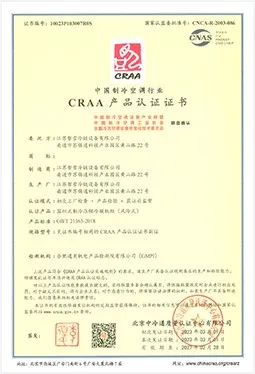
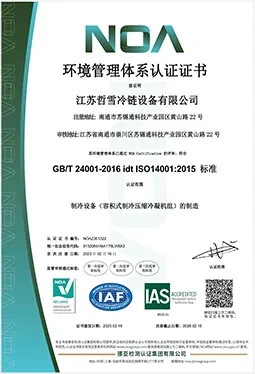
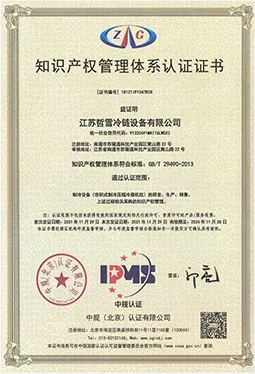
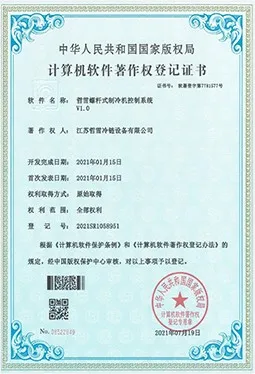
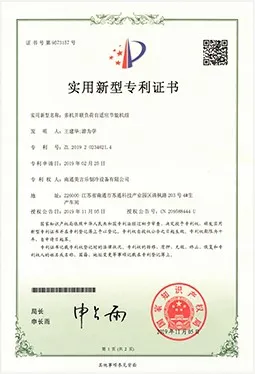
As a national high-tech enterprise, Zhexue has a construction enterprise qualification certificate, a special equipment production license of the People's Republic of China, a Chinese equipment maintenance and installation enterprise capability level certificate, a CRAA product certification certificate, and a safety production license. China Refrigeration Society unit membership certificate and other qualifications, and passed the ISO9001 quality management system, IS045001 occupational health and safety management system and S014001 environmental management system certifcation.
With refined product manufacturing and meticulous quality pursuit, Zhexue pilots and wins in the field of refrigeration, integrating advantages and innovating resources, focus on improving the enterprise's ability to integrate innovation and the ability to introduce, digest, absorb, and re- innovate, and embark on a road of innovation and entrepreneurship with independent itellectual property rights.


Our Honor
Official certification, professional after sales service.
Ultimate FAQ Guide to Industrial Condensing Unit
Q: What are the applications of industrial condensing units?
Q: What is condenser for industrial condensing unit?
Q: What is the most commonly used condenser type in industries?
Q: How to choose industrial condensing unit?
Q: How do I choose a industrial condensing unit?
What is the capacity of the condensing unit?
Also select the cu application.
Power supply and starting torque.
Q: Why horizontal condenser is preferred in industry?
Q: What is the most commonly used condenser type in industries?
Q: Where and how to install the industrial condensing unit?
Q: What is a industrial condensing unit?
Q: What is a industrial condensing unit used for in science?
Q: How does an industrial condensing unit work?
Q: What is a industrial condensing unit?
Q: What are the uses of industrial condensing unit?
Q: What is the most commonly used condenser?
Q: What is the process control of the Industrial Condensing Unit?
Q: Why do you need industrial condensing unit?
Q: Which HVAC system is best for commercial building?
Q: What is the most common Industrial Condensing Unit?
Q: How do you control the pressure in a Industrial Condensing Unit?
Q: Does pressure remain constant in a Industrial Condensing Unit?
We're professional industrial condensing unit manufacturers and suppliers in China, specialized in providing high quality products and service. We warmly welcome you to buy customized industrial condensing unit at competitive price from our factory.
Middle Temperature Industrial Condensing Unit, condensing unit for industrial chilling, refrigeration condensing unit for data centers