

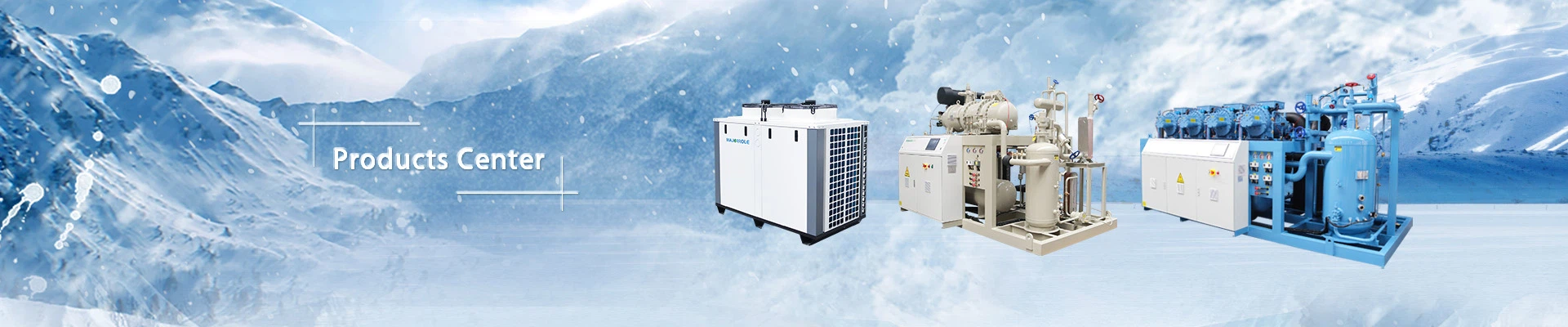
Water Cooled Condensing Unit
Why Choose Us
Variety of products
Our company offers a wide range of products, can offer a wide variety of products or services to their customers. This provides more options to choose from and can improve customer satisfaction.
Reliable quality
Our company have quality assurance mechanisms in place to ensure that their products meet certain standards. This can provide customers with confidence that they are getting a reliable product.
Competitive pricing
Our company provides customers with competitive pricing on its products without compromising their quality.
Customer service
Our team is highly responsive and always available to assist our customers with any questions or concerns.
What Is Water Cooled Condensing Unit?
A water cooled condensing unit is a type of refrigeration system component that uses water to remove heat from the refrigerant. Unlike air-cooled condensing units, which rely on air to cool the refrigerant, water-cooled units use a closed-loop water system to transfer the heat away.
The water cooled condensing unit typically consists of a compressor, a condenser coil, and a water circulation system. The compressor compresses the refrigerant, raising its temperature and pressure. The hot refrigerant then flows through the condenser coil, where it releases heat. Instead of using air to dissipate the heat, the coil is immersed in or surrounded by a flow of water.


Water-cooled condensing units offer several advantages. Each system has its own considerations, such as the availability of a water supply, maintenance costs, and initial installation complexity. A thorough assessment of the site and operational needs is necessary to determine if a water-cooled system is the best choice, including the following.
Higher efficiency in hot climates: Water has a higher heat transfer coefficient than air, allowing for more effective heat dissipation. This makes water-cooled units more efficient in warm or hot environments where air cooling may not be sufficient.
Better heat dissipation: The use of water as a coolant provides better heat dissipation, resulting in more stable and consistent cooling performance.
Lower operating costs: In some cases, water-cooled units can be more energy-efficient, potentially leading to lower operating costs, especially in large-scale applications.
Suitability for large commercial or industrial spaces: Water-cooled condensing units are often preferred in large commercial or industrial settings where the cooling load is significant.
Environmentally friendly: Well-designed water-cooled systems can have higher energy efficiency and potentially reduce the environmental impact compared to air-cooled units.
Reduced noise levels: Since the water cooling system is usually located away from the equipment, it can help reduce noise emissions in certain installations.
Space savings: The condenser coils in water-cooled units are often smaller, freeing up valuable space compared to air-cooled units with larger coil and fan assemblies.
Longer lifespan: With proper maintenance, water-cooled units can have a longer lifespan due to the more efficient heat transfer and reduced stress on the components.
How Does a Water Cooled Condensing Unit Work?
A water cooled condensing unit is a type of refrigeration system component that uses water to remove heat from the refrigerant. The unit typically consists of a compressor, a condenser coil, and a water circulation system.
The compressor compresses the refrigerant, raising its temperature and pressure. The hot refrigerant then flows through the condenser coil, where it releases heat. Instead of using air to dissipate the heat, the coil is immersed in or surrounded by a flow of water.
The water circulation system pulls cool water through the condenser coil, absorbing the heat from the refrigerant. The heated water is then transported away and usually passed through a heat exchanger or cooling tower to release the heat into the surrounding environment. The cooled water is recirculated back to the condenser coil to continue the heat transfer process.

Proper maintenance of the water cooled condensing unit helps ensure its efficient operation, extends its lifespan, and reduces the likelihood of breakdowns.
Maintaining a water cooled condensing unit involves the following steps.
Regular inspections: Inspect the unit periodically for any signs of damage, leaks, or corrosion. Check the water pipes, valves, and connections for leaks.
Clean the condenser coil: The condenser coil should be cleaned regularly to remove dirt and debris. This can be done using a soft brush or a coil cleaning solution.
Monitor water quality: Ensure the water used in the cooling system is of good quality. Dirty or contaminated water can cause scaling or clogging of the pipes and heat exchangers. Install filters and treat the water as needed.
Check and replace filters: Inspect and replace the filters in the water supply and return lines as recommended by the manufacturer.
Lubricate moving parts: If the unit has moving parts, such as bearings or pumps, follow the manufacturer's guidelines for lubrication.
Monitor temperature and pressure: Keep an eye on the temperature and pressure gauges to ensure the system is opera.
Removing heat from refrigerant vapor is the key function of a water-cooled condensing unit. Being able to transfer that heat to the water running through it makes for a functional and energy efficient system within a refrigerator.
In a nutshell, water cooled condensing units:
- Take less cooling time
- Maintain a higher heat transfer rate
- Use less energy over time
- Require no fan operation
- Produce less noise
Unlike air condensers that convert gas to a liquid, typically water cooled condensing units take less cooling time, the heat transfer rate is higher, and no fans are necessary. This saves time, energy, and money. Typically water cooled condensing units produce less noise which is a plus if your refrigerators and equipment are in public near customers.


When considering a water cooled condensing unit:
● Water removes heat from metal surfaces about 15 times more rapidly than air.
● Therefore, water cooled condensing units are much smaller than air cooled condensers.
● A common problem with water cooled condensing units, however, is formation of deposits from water on the tubing walls.
● These scale deposits act as an insulating layer, causing lack of proper heat transfer for condensing of refrigerant.
● This causes high refrigerant discharge pressures and loss of refrigeration capacity.
● When condenser tubes have hard lime or iron scale they may be cleaned with an acid solution.
If the system has a 16°f delta t, the gpm would be 300 and equates to 1.5 gpm per ton. The higher the delta t in the system, the lower the gpm requirements are to achieve the same heat exchange in the system. If the system requires less gpm then the pump will reduce in size, meaning less pump energy is used throughout the year.
This same concept applies to condenser water and hot water systems. The use of vfds also reduces the energy consumption of the pumps greatly. For example, a pump that operates at constant speed will use the same power consumption of the pump all the time, whether the building demand is at 100% capacity or at 50% capacity. Vfds turn down the speed of the pump to match the demand in the building, which reduces the power consumption.
In this case, we will consider the chiller and pumps for an air-cooled chiller plant and the chiller, cooling tower and pumps for a water cooled condensing unit. An average air-cooled chiller plant has an efficiency of roughly 1.5 kw/ton, while the efficiency of a water cooled condensing unit is approximately 0.85 kw/ton. Obviously, a water-cooled chiller plant is more efficient, but that is not the only factor to consider.

Available space
Studying and analyzing the available space is a very important point to choose the water cooled condensing units. Many cus are based on a metal plate or a "rail," whose sizes are not standards in all cases, although the goal is always to seek the standardization.
Another important point about the physical space is the family of the compressor. The compressors of different families have different heights and, therefore, you should pay attention to not be a problem at the time of assembly.
What is the capacity of the water cooled condensing unit?
Water cooled condensing units, for example, are designed by engineers specialized in refrigeration. So, each set cu ( "compressor + condenser" ) is appropriately sized which ensures technical reliability for the customers.
Due to the sizing accuracy, you can select a unit according to the ability that your compressor develops.
This ability depends on the operation point, such as temperature, evaporation and condensation, that we will see in more detail in the next step.
Also select the cu application
The water cooled condensing units need to be selected according to the application, such as refrigerated counters and beverage refrigerator, for example. One of the main items refers to the evaporating temperature desired in the cooling system, which depends on the "application envelope" (evaporation) that the compressor is approved and ready to work.
The evaporation ranges of each compressor and, therefore, of every condensing unit, vary from one to another. So, when choosing the cu, you should always check the evaporation range that the compressor is approved to work. It is possible to assess by means of technical data sheets. Hereyou can select the product and check this important information.
If it is necessary to apply an uc with different fluid from that used by the previous system, you must check that the operation pressures (evaporation and condensation) are within a safe threshold for system pipes.
Power supply and starting torque
In addition to the discussion above, also stay tuned to the power supply. Be sure to select condensing units that feed with the same voltage and frequency of the power supply.
Also analyze the starting torque. In systems using the expansion valve (instead of capillary tube) you must pay attention if the compressor is in the condensing unit has a high starting torque.
For example: Compressors with low starting torque should be applied only to systems with capillary tube, and compressors with high starting torque can be applied to expansion valve and capillary tube.
Our Factory
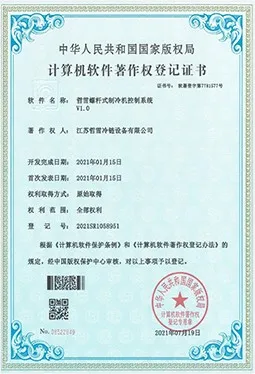
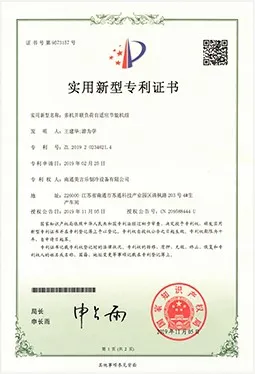
On October 27, 2017, Zhexue Group setled in Nantong.
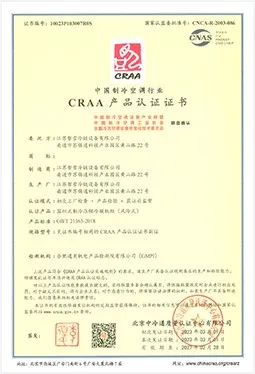
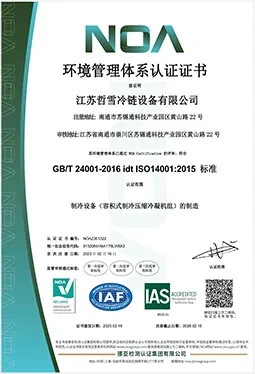
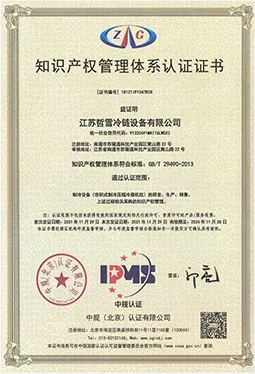
As a national high-tech enterprise, Zhexue has a construction enterprise qualification certificate, a special equipment production license of the People's Republic of China, a Chinese equipment maintenance and installation enterprise capability level certificate, a CRAA product certification certificate, and a safety production license. China Refrigeration Society unit membership certificate and other qualifications, and passed the ISO9001 quality management system, IS045001 occupational health and safety management system and S014001 environmental management system certifcation.
With refined product manufacturing and meticulous quality pursuit, Zhexue pilots and wins in the field of refrigeration, integrating advantages and innovating resources, focus on improving the enterprise's ability to integrate innovation and the ability to introduce, digest, absorb, and re- innovate, and embark on a road of innovation and entrepreneurship with independent itellectual property rights.


Our Honor
Official certification, professional after sales service.
Ultimate FAQ Guide to Water Cooled Condensing Unit
Q: What is the main maintenance concern with water cooled condensing units?
Q: What happens to vapor in a water cooled condensing unit?
Q: What are the three types of water cooled condensing units?
Shell-and-tube.
Brazed plate.
Coaxial tube-in-tube.
Q: What is a reasonable condensing temperature for a water cooled condensing unit?
For city water applications the design criteria are based on a twenty degree rise with 105ºf condensing temperature, or 75/95/105. Of course when you have a water regulating valve and 55ºf city water temps, the flow will be less but the rise will be about 40ºf.
Q: Which is better air cooled or water cooled condensing unit?
Q: Which is better air cooled or water cooled condensing unit?
Q: What materials are used in water cooled condensing unit tubes?
Q: What is a water cooled condensing unit?
Q: How do you charge a water cooled condensing unit?
Q: Is a condensing unit the same as an AC unit?
Q: What are the parts of a water cooled condensing unit?
Q: What materials are typical refrigeration condensers made of?
Q: Where does the cooling water for the condenser come from?
Q: What happens to the condenser split of a water cooled condensing unit if the condenser tubes are dirty?
Q: What happens to vapor in a water cooled condensing unit?
Q: How do you clean a water cooled condensing unit?
Q: What problem does hard water cause in water cooled condensing unit?
Q: Why do water cooled condensing units require an interlock in the condensing unit control circuit?
Q: How much more efficient are water cooled condensing units than air-cooled?
Q: What are the two types of water cooled condensing units?
We're professional water cooled condensing unit manufacturers and suppliers in China, specialized in providing high quality products and service. We warmly welcome you to buy customized water cooled condensing unit at competitive price from our factory.
water cooled condensing unit for bakery industry, condensing unit for florists, water cooled air conditioning machinery condensing unit